Published work
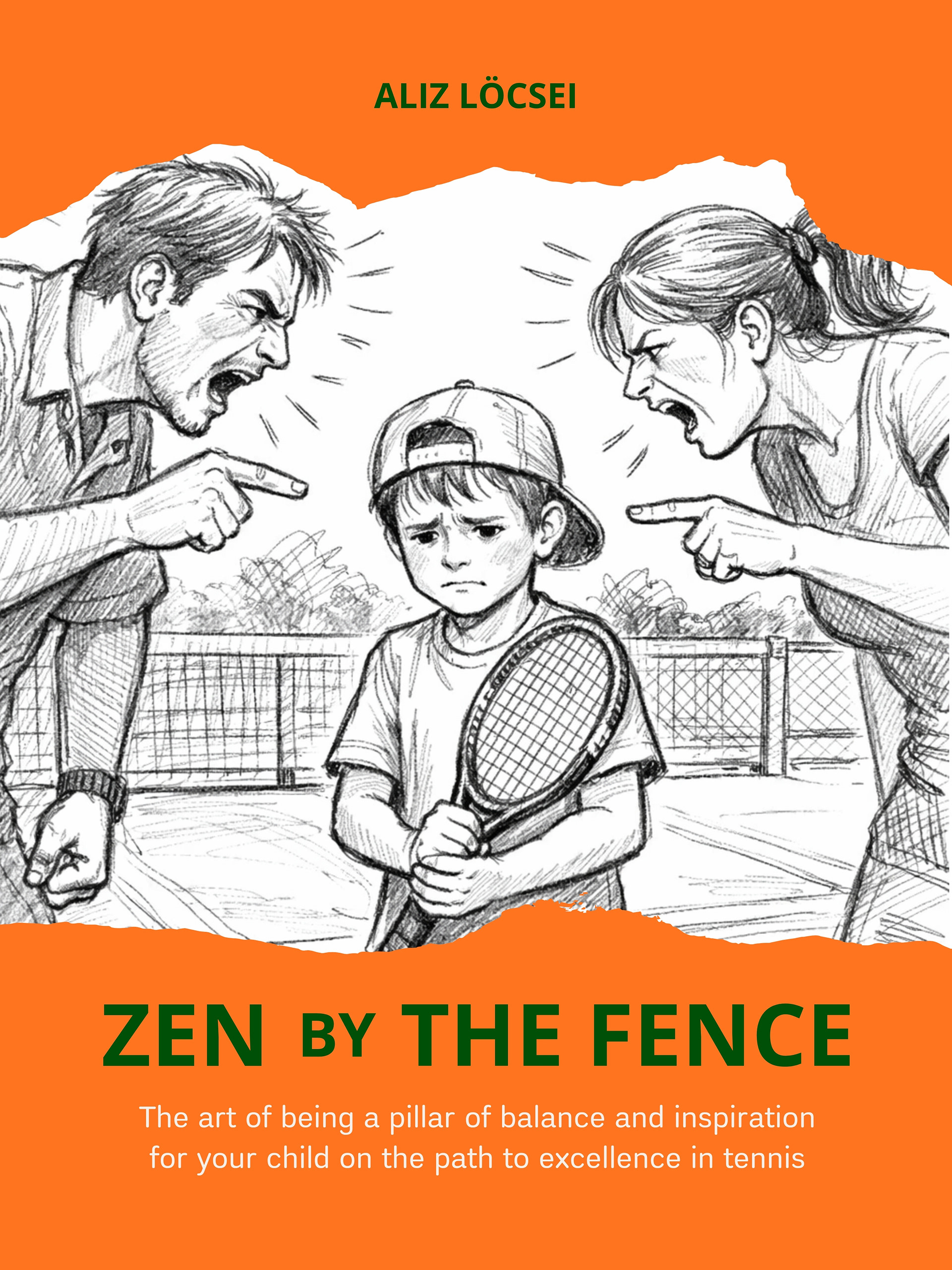
Tennis is more than just a game, it’s a profound journey where character, courage, and resilience are forged point by point. But what does it truly mean to be a parent standing by the fence, watching your child face the pressures of competition, victories, and defeats?
In Zen by the Fence, the author draws from almost three decades of hand-on experience as a coach to reveal the essential role parents play in shaping not only their child’s athletic performance but also their emotional well-being and personal growth. This insightful guide is not a technical manual on forehands or serves; it is a heartfelt exploration of how to become the calm, steady anchor your young athlete needs: a source of safety, encouragement, and wisdom amid the storm of competition.
Discover how to:
⦿ Understand the unique temperament and developmental stage of your child
⦿ Set realistic expectations that foster growth without pressure
⦿ Navigate the complex Parent-Player-Coach dynamic with clear roles and healthy boundaries
⦿ Manage emotions, avoid common pitfalls, and communicate effectively during tournaments
⦿ Build routines off the court that support physical and mental recovery
⦿ Protect your child from the damaging effects of comparisons, social drama, and undue pressure
⦿ Foster long-term confidence through process-focused support, not just results
Whether your child is just starting tennis or competing at higher levels, Zen by the Fence offers practical advice, real-life stories, and emotional insights to help you cultivate a nurturing environment where your child can thrive, on the court and in life.
If you want to be more than a spectator, if you want to be the pillar of strength that inspires your child to play freely, learn courageously, and grow holistically, this book is your essential companion.
Twenty-seven years on a tennis court, and one question that refuses to go away.
Not how do we build better players? but what kind of people are we building through the way we coach them?
A ten-year-old hears “you should have won” and understands “I am not good enough.” Same sentence. Different lesson. The distance between those two things is where a coaching career is quietly decided.
THE ETHICAL TENNIS COACH is a working notebook drawn from nearly three decades on court — with players, with families, with academies, and with coaches who meant well and got it wrong anyway. It argues something uncomfortable: most of what damages young athletes isn’t cruelty. It’s inherited habit. Methods nobody consciously chose, repeated because they worked once, on someone, a long time ago.
This is not an argument for softer coaching.
Winning matters. Ambition matters. Nothing here tries to drain the seriousness out of competition. But frightening a child into compliance is easy, building an athlete who still meets the standard when you’re outside the fence and can’t say a word is a different order of work entirely.
Across 72 short chapters:
⦿ Why fear and discipline look identical from the outside, and behave nothing alike the moment the coach walks away
⦿ The line between difficulty and damage and how to keep demanding one without producing the other
⦿ Correct the behaviour, never the identity: what changes when “you’re lazy” becomes “your intensity dropped in the last twenty minutes”
⦿ “It worked for me” and the players who couldn’t survive that system, who left long before anyone thought to count them
⦿ Handing responsibility over in stages, until the game finally belongs to the player
⦿ Reading a scoreboard as information rather than a verdict
⦿ What a parent should actually do in the first ten minutes after a match
⦿ Why the strongest coaches eventually become quieter, and less necessary
Plus a complete practical toolkit: session structure, feedback transformation exercises, the coach’s self-audit, the parent post-match protocol, player reflection practice, and a seasonal development review that measures more than ranking.
Written for the coach who already knows the same instruction can land beautifully with one player and fail completely with the next. For the parent who wants to help and isn’t sure whether to speak or stay quiet. For the academy director who suspects the culture printed on the wall isn’t the culture out on the courts.
Read it in order, or open it at random after a bad session. Steal one question and take it onto the court tomorrow. Argue with it in the margins.
Because the player eventually walks off the court carrying everything you taught them, including the things you never meant to teach.
Leave them better than you found them.
Not just as a tennis player but as a person.